
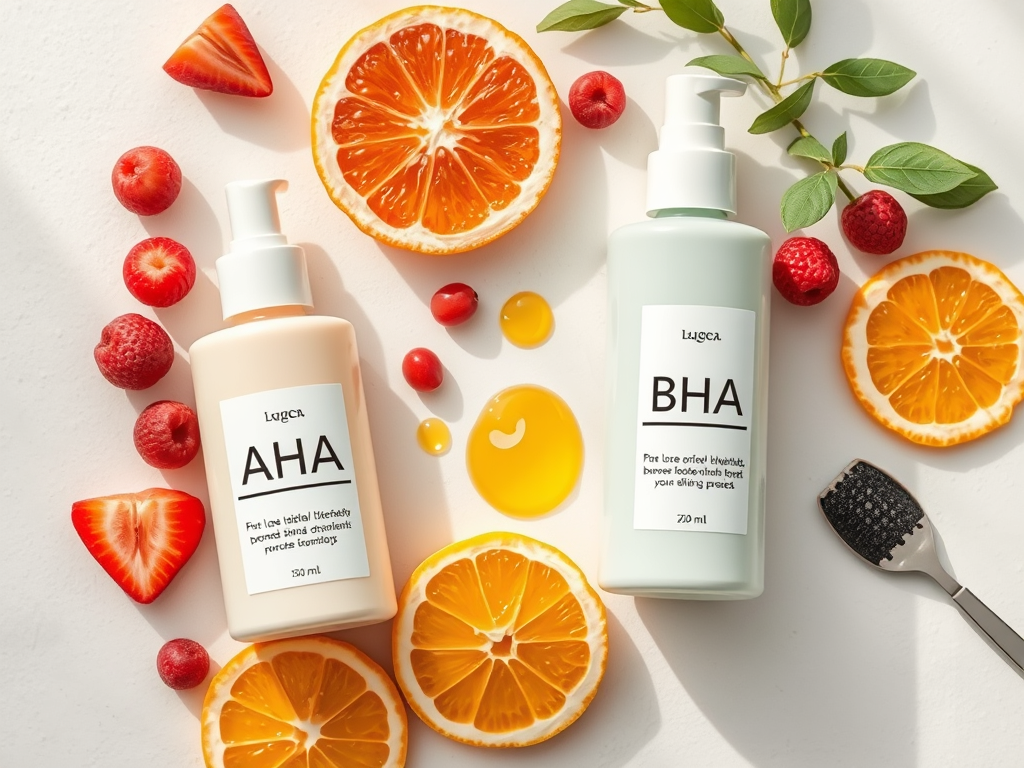
The Importance of Exfoliation in Skincare
Exfoliation is a key step in any skincare routine, helping to remove dead skin cells, unclog pores, and reveal a fresh, glowing complexion. While there are many ways to exfoliate, chemical exfoliants have become incredibly popular in recent years, especially AHAs (Alpha Hydroxy Acids) and BHAs (Beta Hydroxy Acids). But what exactly are they, and how do they differ? In this post, we’ll break down the differences between AHAs and BHAs and explore why exfoliation is so important for maintaining healthy, radiant skin.
What Are AHAs and BHAs?
AHAs (Alpha Hydroxy Acids) are water-soluble acids derived from natural sources like fruits, milk, and sugar cane. These acids work primarily on the surface layer of your skin to slough off dead skin cells, leaving you with a smoother, brighter appearance. Common AHAs include glycolic acid, lactic acid, and citric acid.
BHAs (Beta Hydroxy Acids), on the other hand, are oil-soluble acids. The most common BHA is salicylic acid, which has the unique ability to penetrate deeper into the skin, particularly into the pores. Because of its oil-soluble nature, BHAs are especially effective for individuals with oily or acne-prone skin, as they can help clear out blocked pores and reduce inflammation.
How Do AHAs and BHAs Work?
1. AHAs: These acids work by breaking the bonds between dead skin cells on the surface, allowing them to shed naturally and reveal fresher skin underneath. AHAs are best for those looking to address concerns like dry, dull, or uneven skin tone. They are particularly effective at improving skin texture, brightening the complexion, and reducing the appearance of fine lines and wrinkles.
2. BHAs: BHAs penetrate deeper into the skin and are particularly effective for treating acne and clogged pores. By dissolving excess sebum (oil) and dead skin cells inside the pores, BHAs help prevent breakouts and reduce the appearance of blackheads. They also have anti-inflammatory properties, making them an excellent choice for those with sensitive or acne-prone skin.
Key Differences Between AHAs and BHAs
| Feature | AHAs (Alpha Hydroxy Acids) | BHAs (Beta Hydroxy Acids) |
| Solubility | Water-soluble | Oil-soluble |
| Best for | Dry, dull, or uneven skin texture | Oily, acne-prone, or sensitive skin |
| Common Acids | Glycolic acid, Lactic acid, Citric acid | Salicylic acid |
| Penetration | Works on the surface layer of the skin | Penetrates deeper into the pores |
| Exfoliation Depth | Surface exfoliation (gentle) | Deeper exfoliation (clears pores) |
Why Is Exfoliation Important for Your Skin?
Exfoliation, whether chemical or physical, is vital for maintaining healthy, glowing skin. Here are some of the key benefits:
1. Removes Dead Skin Cells: As we age, our skin’s natural process of shedding dead skin cells slows down, leading to a dull complexion and clogged pores. Regular exfoliation helps to speed up this process, revealing brighter, more youthful skin.
2. Improves Skin Texture and Tone: Exfoliating helps to even out skin tone, reduce dark spots, and refine skin texture. This is particularly beneficial for those dealing with hyperpigmentation, acne scars, or rough patches.
3. Unclogs Pores: Blocked pores are a major contributor to acne and blackheads. Chemical exfoliants like AHAs and BHAs penetrate deep into the skin, helping to keep pores clear and reduce the risk of breakouts.
4. Boosts Product Absorption: When dead skin cells are removed, your other skincare products (like serums and moisturizers) can penetrate more effectively, allowing them to work better.
5. Stimulates Collagen Production: Regular exfoliation can stimulate the production of collagen, which helps to firm and plump the skin, reducing the appearance of fine lines and wrinkles over time.
Which One Should You Choose: AHA or BHA?
Choosing between an AHA and BHA depends on your skin type and concerns:
• Dry or Aging Skin: If your skin is dry, sun-damaged, or showing signs of aging (like fine lines and wrinkles), AHAs are a great choice. They help to exfoliate the surface of the skin, improving texture and promoting a more radiant complexion.
• Oily or Acne-Prone Skin: If you struggle with acne, blackheads, or oily skin, BHAs—especially salicylic acid—are your best friend. BHAs can penetrate deeply into your pores to clear out oil and prevent breakouts, all while providing gentle exfoliation.
• Sensitive Skin: If you have sensitive skin, it’s important to start slow with any exfoliant. While both AHAs and BHAs can be used by sensitive skin types, BHAs (especially salicylic acid) are typically gentler and less likely to cause irritation. It’s always a good idea to patch-test first and gradually introduce new products to your routine.
How Often Should You Exfoliate?
Exfoliating too often can lead to skin irritation and over-exfoliation, which can damage the skin’s natural barrier. For most people, exfoliating 2–3 times a week is sufficient, though you can adjust based on your skin’s needs. Always follow up with a moisturizer to keep your skin hydrated and apply sunscreen during the day, as exfoliation can make your skin more sensitive to the sun.
Conclusion
Exfoliation is an essential part of skincare, and understanding the difference between AHAs and BHAs can help you select the right exfoliant for your skin type. Whether you’re looking to brighten your complexion, treat acne, or improve skin texture, there’s an exfoliant out there for you. By incorporating the right chemical exfoliants into your skincare routine, you’ll be one step closer to glowing, healthy skin.
 Selfish X Ariel
Leave a comment